
Bringing a Business to Market
Before bringing a business to market, there are a number of important issues every owner should first understand, many of which are likely unfamiliar to first-time sellers and can materially affect valuation, deal structure, taxes, buyer confidence, financing, due diligence, and final proceeds.
Sophisticated buyers evaluate far more than revenue and profit and often focus on issues owners may not have previously considered, including working capital, confidentiality, transaction structure, asset versus stock sale considerations, customer concentration, operational risks, and future growth opportunities.
These brief seller guides below introduce many of the important topics business owners should familiarize themselves with before selling a business, including valuation, confidentiality, transaction structure, working capital, due diligence, and other common areas of buyer focus. Each summary, additionally includes access to a far more detailed report for owners seeking a deeper understanding of each topic.
Guides Listed Below
How Your Business Will Be Valued
Buyers find it surprising that many factors beyond reported profit or tax return income influence business valuation. Buyers evaluate financial performance, risk, growth opportunities, transferability, market conditions, and industry demand when determining value. This guide introduces the key factors that influence valuation and why proper preparation and positioning can materially impact buyer perception and transaction outcome. For additional detail, the complete Valuation Guide is available free upon request.

Preparing Your Business for Sale
Maximizing value at the time of sale rarely happens by accident. Businesses that are properly prepared, organized, and thoughtfully positioned often attract stronger buyer interest, greater confidence, and more favorable outcomes. Preparation involves far more than financial performance alone; it includes organization, presentation, identifying value drivers, addressing buyer concerns, and positioning the business for a sophisticated buyer audience. To learn more, the complete Preparing Your Business for Sale Guide is available free upon request.
Confidentiality & Buyer Qualification
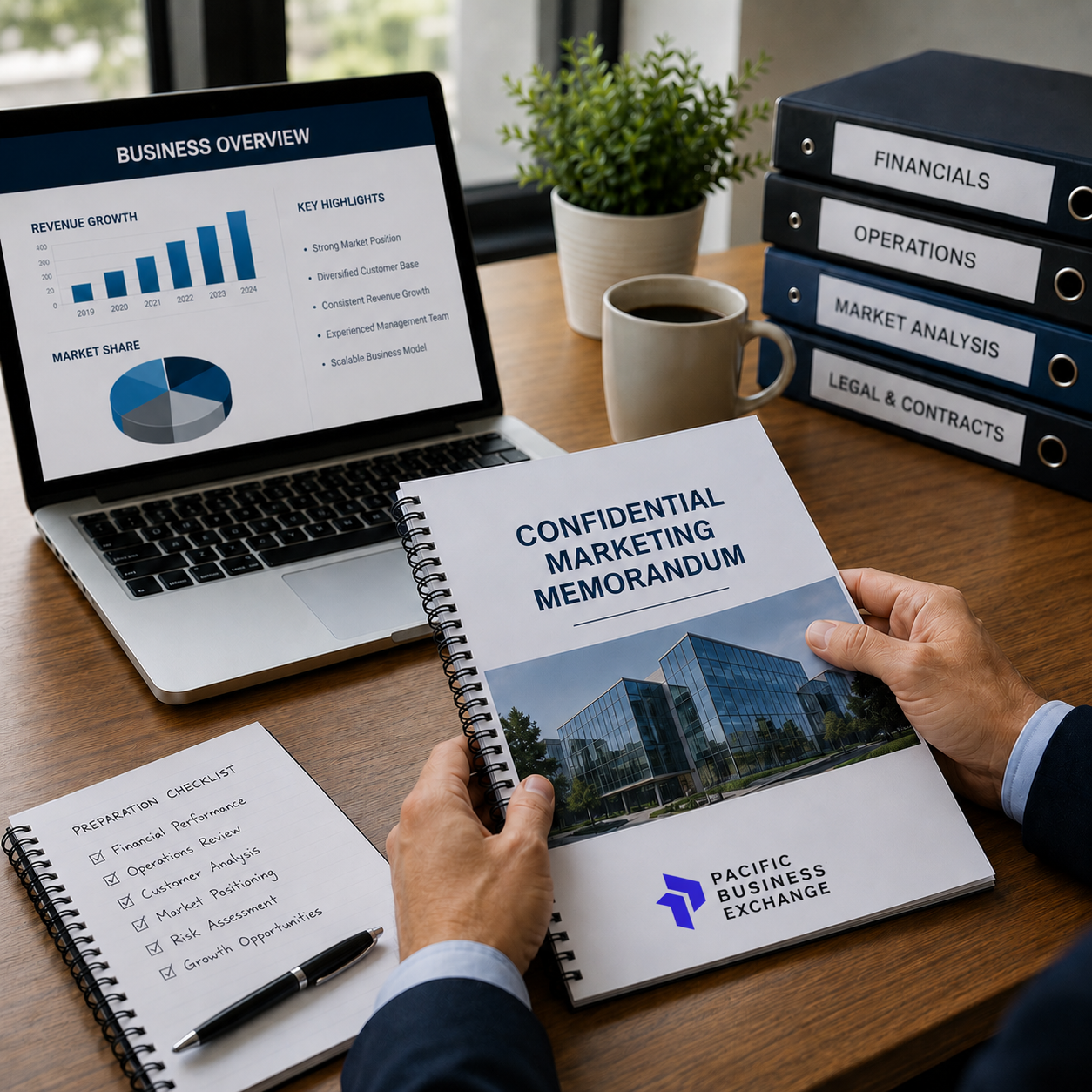
For many business owners, confidentiality is one of the most important concerns in the sale process. Employees, customers, vendors, competitors, and market participants often remain unaware of a potential sale at the seller’s discretion, making careful buyer screening, confidentiality agreements, and controlled information flow critically important. This guide explains how confidentiality gets protected and how prospective buyers get evaluated before releasing sensitive information. To learn more, the complete Confidentiality Guide is available free upon request.

Asset vs. Stock Sale & Tax Considerations
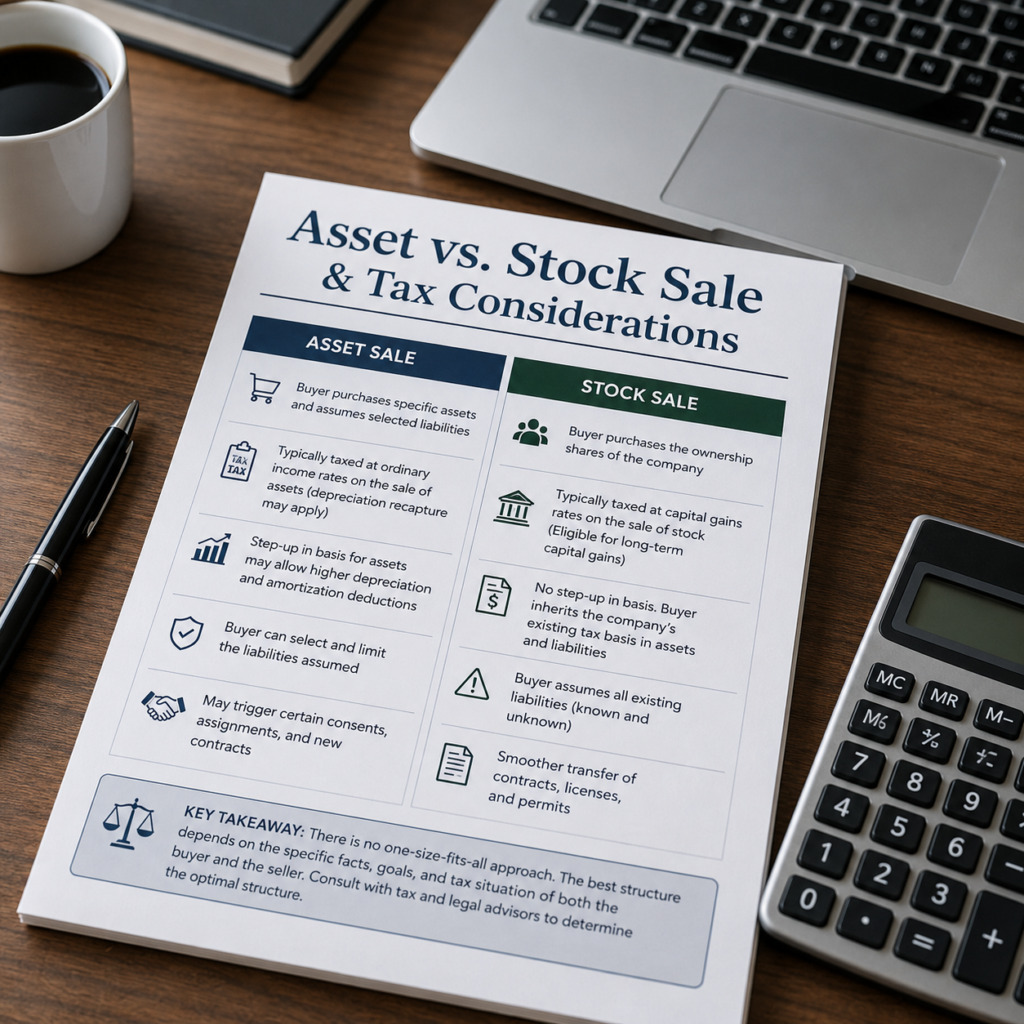
The structure of a transaction can materially influence taxes, liability, deal complexity, and ultimately the seller’s net proceeds. Buyers and sellers often have differing preferences regarding whether a business is acquired through an asset sale or stock sale, making it important to understand both the structural and tax implications early in the process. This guide introduces the key differences and considerations that can materially affect transaction outcome and after-tax proceeds…To learn more, the complete Asset vs. Stock Sale & Tax Considerations Guide is available upon request.
Transaction Strategies & Financing
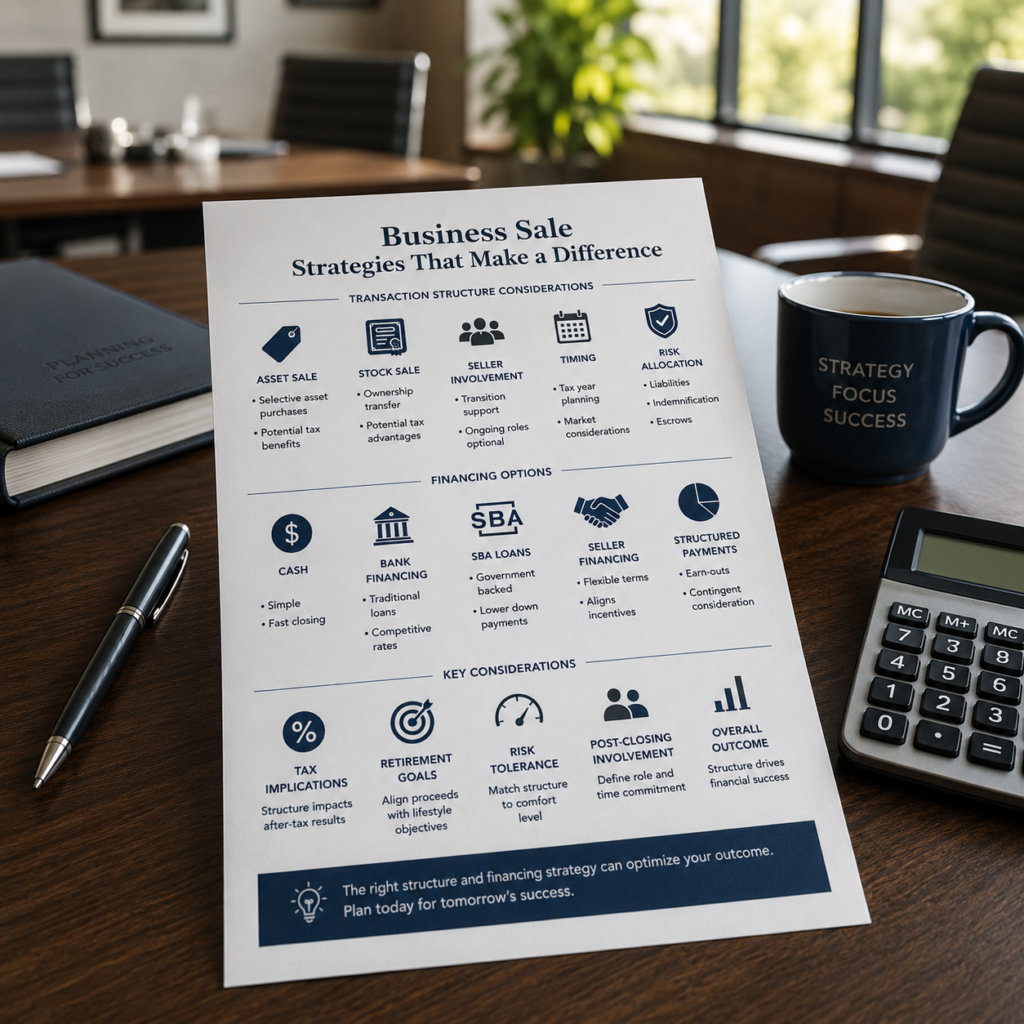
No two business sales are exactly alike. Beyond price, transaction structure and financing can materially influence taxes, risk, timing, seller involvement, and the overall financial outcome. Buyers may utilize cash, bank financing, SBA loans, seller financing, or structured payment arrangements, while sellers often evaluate alternatives based upon tax considerations, retirement goals, risk tolerance, and desired involvement after closing. Understanding available transaction and financing strategies can help owners better align deal structure with their personal and financial objectives…To learn more, the complete Transaction Strategies & Financing Guide is available upon request.
Confidential Marketing Memorandum (CMM)
A well-prepared Confidential Marketing Memorandum (CMM) is one of the most important tools in the sale process. More than a financial summary, it is the document used to thoughtfully present the business, communicate operational strengths, financial performance, competitive advantages, and future growth opportunities to qualified buyers in a clear and credible manner. Proper preparation of the CMM helps buyers better understand the opportunity while improving confidence, interest, and buyer perception…To learn more, the complete Confidential Marketing Memorandum Guide is available upon request.
Buyer Qualification
Not every prospective buyer represents a legitimate or appropriate fit for a business acquisition. Protecting confidentiality and managing the sale process often begins with screening buyers to better understand their background, financial capability, acquisition objectives, industry experience, and overall suitability before sensitive information is released. Proper buyer qualification helps ensure confidential information is shared only with parties demonstrating genuine interest and a reasonable ability to complete a transaction…To learn more, the complete Buyer Qualification Guide is available upon request.

Due Diligence
Due diligence is the process through which a prospective buyer verifies the financial, operational, and legal aspects of a business before completing an acquisition. While often viewed as one of the final stages of a transaction, proper preparation early in the process can help reduce delays, avoid surprises, and improve buyer confidence. Organized financial information, clear documentation, and thoughtful preparation often contribute to a smoother and more successful transaction…To learn more, the complete Due Diligence Guide is available upon request.

Working Capital Adjustments
Many business owners are surprised to learn that the purchase price is not always the final amount received at closing. In certain transactions, particularly larger or more sophisticated acquisitions, buyers and sellers may negotiate a normal level of working capital, such as accounts receivable, inventory, and operating cash needs, to remain with the business at closing. Understanding how working capital adjustments are structured can help sellers avoid surprises and better understand how final proceeds may be affected…To learn more, the complete Working Capital Adjustment Guide is available upon request.